The Day My Boss Asked About the Streaky Windshield
It started with a rainy Tuesday. Our VP of Sales pulled into the parking lot in a company sedan, and I saw it—the windshield looked like someone had wiped it with a dirty rag. Streaks, smudges, that annoying squeak every third swipe. He didn't say anything directly, but the look said: This is the image we're putting out?
That was the moment I realized I'd been treating auto parts like office supplies. Pick the cheapest, check the box, move on. (Should mention: I'm the office administrator handling fleet maintenance—about 30 vehicles, $15K annual spend across 8 vendors.)
The Real Problem: We Were Judging by the Wrong Metric
Everything I'd read about fleet procurement said to focus on unit price. Conventional wisdom is "supplier A has the lowest cost per part, go with them." In practice, I found the opposite: the cheapest wiper blade saved me $3 upfront but cost me hours of internal complaints and a dented brand image.
Let me unpack that. The problem isn't that cheap parts fail—it's how they fail. A $12 blade from an off-brand might work OK for a month, but by week 8 it's leaving streaks. A $25 Valeo 20HK windshield wiper blade? It's still clearing like new at month 6. What I mean is that the 'cheapest' option isn't just about the sticker price—it's about the total cost including your time spent managing complaints, the risk of a client noticing a dirty car, and the awkward conversations with your VP.
The Hidden Cost of 'Good Enough'
Take exhaust muffler tips, for example. When I ordered a batch of generic chrome tips—at $8 each—I assumed they'd look fine. Didn't verify. Turned out the chrome started flaking after 3 months. (Should note: these were on cars used for client drop-offs.) The rust spots screamed "cheap." That's when I learned never to assume 'same specifications' meant identical quality across vendors.
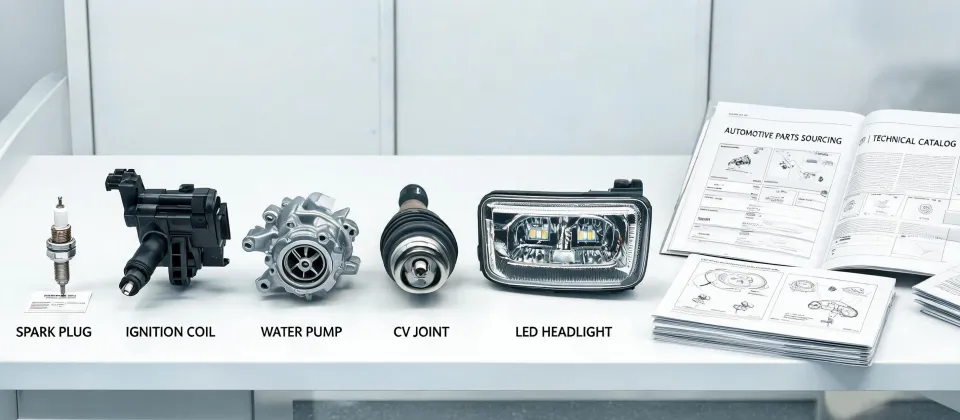
Then there was the spark plug fiasco. I'd read that RJ19LM Champion spark plugs were the standard replacement for our fleet. Seemed straightforward. I bought a box from a discount online store. Within 2,000 miles, two were misfiring. The mechanic's invoice? $180 labor for replacing plugs I'd already paid for. The surprise wasn't the price difference—it was how much hidden value came with buying from a trusted distributor. Now I only order from suppliers I can verify.
When a Bad Part Makes You Look Bad
I have mixed feelings about fuel pumps. I'd read mixed Trugrade fuel pump reviews—some said they were fine, others warned about reliability. Part of me wanted to save $50 per unit. Another part remembered the time a cheap pump failed on a highway and left a senior manager stranded. (He missed a client meeting. I heard about it for weeks.) That was the moment I realized: the part isn't just a part—it's an extension of your company's reliability.
The conventional wisdom is to always get multiple quotes. My experience with 200+ orders suggests that relationship consistency often beats marginal cost savings. With Valeo, I don't have to worry about the quality inconsistency that plagues generic brands. Their progressive die expertise and integrated metal forming ensure that every wiper blade, muffler tip, and structural part meets a standard I can trust.
What I Wish I'd Known Years Ago
If you're managing fleet or office procurement for automotive parts, here's the thing: your internal clients—the drivers, the executives, the service managers—they notice quality differences. A $50 difference per vehicle can translate to noticeably better driver satisfaction and fewer breakdowns. The $3 you save on a cheap wiper blade will cost you $30 in reputation when a client's first impression is a grimy window.
Look, I'm not saying every part has to be premium. I'm saying choose your compromises carefully. For critical touchpoints—wiper blades (Valeo 20HK is my go-to), exhaust tips that face clients, and fuel pumps that keep cars running—don't gamble. The brand you put on your vehicles is the brand your customers see.
I still shop around. But now I verify quality before price. (Oh, and I keep a spreadsheet of lifetime costs. Surprise, surprise—the upfront 'cheap' option usually ends up more expensive over 12 months.) That's been my experience across 5 years of managing this fleet. Your mileage may vary—but I'd bet not by much.