Last October, on a Tuesday morning that started like any other, our sales manager Tom walked into my office holding the keys to one of our five Volkswagen vans. "Battery light came on," he said. "Can you get it looked at?" That moment turned into a crash course in car parts, supplier decisions, and brand perception.
I'm not a mechanic. I'm the office administrator here. I run purchasing for a 45-person firm, managing roughly $350,000 a year in office and operational spend across eight or nine vendors. The company fleet is a small part of that, but it's the most visible part. When one of our vans breaks down, people don't see the alternator; they see a branded vehicle on a tow truck.
The Search: "Alternator VW AG Valeo"
The first thing I typed into Google was "alternator vw ag valeo." That search string led me to the original equipment supplier: Valeo, a French auto parts manufacturer that supplies alternators to VW, Ford, Mercedes, and others. For a Volkswagen Auto Group vehicle, "Valeo" isn't just an aftermarket brand; it's the OEM name. The official Valeo support page lets you enter a VIN and verify the exact part number, mounting bracket, and warranty coverage. I called their support line, and after two minutes on the phone, I had a precise match.
While I was in research mode, I also looked up the "ac delco alternator" option. ACDelco is a respected name in the Americas, but most of its applications are for GM vehicles. The few compatible ones for our VW cost more and had stricter return policies. For a non-mechanic, the clearer the support, the better. I noted it as a backup and kept looking.
The Cheap Option Looked Too Good
Then I found a generic remanufactured alternator for $165. On paper, it was a direct fit. The price for a new Valeo unit was around $380 to $550 in current public listings, so this was a saving of more than half. (I am using online parts catalogs accessed in January 2025; prices obviously change.) The upside was a smaller invoice. The risk was a failure at the wrong moment. I kept asking myself: is $165 worth the chance of a stranded van on a highway? The expected value said the odds of a quick failure were low. I ordered the cheap one anyway.
It shipped in a plain box with a 90-day warranty (ugh). The local shop installed it without drama. The van started. The battery light went away. I filed the paperwork and moved on—for two weeks.
The Breakdown
Then the van died on the freeway. Tom was driving to an important client meeting when the dashboard went dark. The alternator had failed, the battery drained, and the engine shut down. He coasted to the shoulder and waited for a tow truck. A potential client drove past; another one saw Tom standing on the side of the road in a company polo, looking at a tow truck driver. It was not just a mechanical failure. It was a public relations failure, and I caused it.
Oh, and the first shop refused to warranty the labor because they hadn't sourced the part from their own supplier. (Should mention: I had no formal process for vetting parts suppliers at that point. That's exactly how this kind of thing creeps in.)
The Real Cost of a Discount
Let me do the math in the open. The cheap alternator: $165. First installation: $240. Tow truck: $135. The correct Valeo alternator: $420. Second installation: $260. Total parts and labor: $1,220. The missed client presentation was worth about $3,500 in projected revenue, plus the hours I spent rescheduling and the apologetic tone in Tom's emails. So that $165 part ended up costing nearly $5,000 and a dent in our reputation.
As of January 2025, public auto parts listings show new Valeo alternators for a VW Golf/Passat in the $380–$550 range. They're not cheap. But compared with a breakdown in front of a client, they're the most affordable option I know.
Side Lessons: Toyota Catalytic Converter Prices and CV Joints
That same week, I had to look up a "toyota catalytic converter price" because a Toyota sedan in our regional office had its catalytic converter stolen. The OEM replacement was $1,200 plus labor; a cheap aftermarket unit was $400, but it wouldn't pass local emissions standards and carried no meaningful warranty. We paid for the OEM unit. That experience felt exactly like the alternator problem, just on a larger scale.
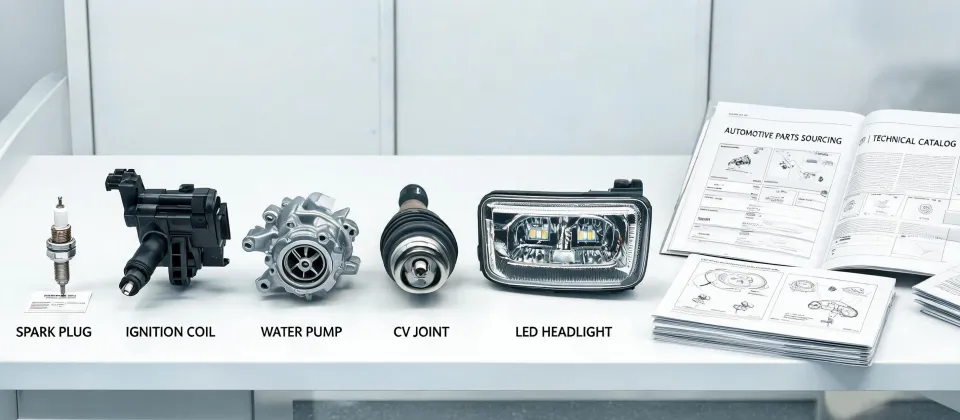
Then the van's front wheels started clicking. The mechanic used the phrase "CV joint," and I had to ask, "what is the cv joint in a car?" He explained: it's a constant velocity joint that transfers power from the transmission to the wheel while allowing the suspension to move. The joint is protected by a rubber boot filled with grease. When the boot cracks, dirt gets in, grease leaks out, and you hear a clicking sound when turning. If you ignore it, the shaft can break and leave you stranded. The repair costs $200 to $400 per shaft, depending on vehicle.
We replaced the CV shaft with a factory-grade unit, not a cheap generic one. By then, I'd learned the lesson twice in one month.
What I'd Do Differently
Looking back, I should have bought the genuine Valeo alternator from the beginning, and I should have asked the shop to source it for us. If I could redo that decision, I would have invested $11 per week in peace of mind instead of gambling with a supplier I had never vetted. At the time, the price difference looked like waste. Now it looks like insurance.
For other administrators and buyers: when you see a part with a familiar OEM name on it, the name is worth something. Quality is not just about the product; it's about the way your company shows up in the world. No customer can see which alternator is in your van until it fails. When it fails, they see your brand on the side of a tow truck.
What you buy is what you become in the customer's eyes. Buy cheap parts, and your brand will reflect them.
So if you ever find yourself searching for "alternator vw ag valeo" or wondering "what is the cv joint in a car," take the extra step. Look up the OEM support page, check the real price, and ask what the cheapest option will do when you're on the road. The right part isn't an expense; it's an investment in a morning that starts with the battery light off.