-
Why Do Searches for Valeo and Underfloor Heating Thermostats Overlap?
-
How Do I Contact Valeo?
-
Where Can I Find a Valeo Alternators Distributor in the USA?
-
What Is an Ignition Coil on Plug, and Does It Need to Be OEM?
-
How Does a Brake Caliper Work?
-
What Does Underfloor Heating Have to Do With Any of This?
-
Is Valeo Alternator Quality Actually Good?
-
The Bottom Line
Before we get into it — this article answers a specific type of question. If you're sourcing alternators, thermostats, or ignition components in the aftermarket or OEM space, and you're not entirely sure who to contact or what to verify first, this is for you.
I've spent the last six years reviewing supplier quality for automotive parts, and I've rejected more first articles than I care to count. In 2024 alone, 12% of my initial deliveries didn't pass spec. So when someone asks about Valeo alternators or underfloor heating thermostats, my first instinct isn't to give you a product brochure. It's to give you a checklist.
- How do I contact Valeo directly?
- Who is an authorized Valeo alternators distributor in the USA?
- What's the difference between an ignition coil on plug and a traditional coil?
- How does a brake caliper work, and why does it fail?
- Wait — why is underfloor heating thermostat in the same list as car parts?
Fair question. Let's start there because it's not as random as it looks.
Why Do Searches for Valeo and Underfloor Heating Thermostats Overlap?
It's an odd search pattern if you only think of Valeo as an automotive supplier. But Valeo also makes thermal systems for buildings. Not the same division, not the same product line, but the same brand family. So when someone searches for an underfloor heating thermostat and lands on Valeo's name, they're usually looking for a thermostat that controls a water-based radiant heating system — not a car part.
That's a different purchasing path entirely. If you're an HVAC contractor, you're dealing with thermostatic mixing valves and floor temperature sensors. If you're in automotive, you're dealing with alternator output curves and coil-on-plug failure modes. Both are thermal management, but they're not interchangeable.
I'll be honest — my experience is on the automotive side. I've reviewed alternators, ignition coils, and brake calipers. I haven't specified building HVAC components since a 2022 project where a client asked me to look over the quality requirements from a Chinese thermostat manufacturer. But I can tell you that the same principle applies to both: don't assume the brand name means the product is right for your application.
How Do I Contact Valeo?
The most direct answer: Valeo's official website has a contact page with regional offices. For automotive aftermarket questions in the USA, you'll want the Valeo Service division. Their corporate headquarters in France is the legal entity, but they don't handle individual parts inquiries from the US directly — you need the local team or an authorized distributor.
I know it's frustrating when a "contact us" page leads to a form that asks for your VIN or part number before you can talk to a human. That's because brand compliance teams (people like me, on the OEM side) want to route you to the right channel. If you email a generic address asking for an alternator for a 2018 F-150, the response will be slower than if you go directly to a distributor.
Should mention: if you're an OEM or Tier 1 buyer, you don't start at the contact page. You start with your existing Valeo account manager or supplier portal. Mismatched requests from unverified contacts slow down the purchasing process for everyone.
Where Can I Find a Valeo Alternators Distributor in the USA?
Valeo alternators are sold through a few channels in the US:
- OEM dealer networks — if the alternator is original equipment, the car brand's dealer parts desk can source it
- Authorized aftermarket distributors — major national parts distributors carry Valeo units
- Rebuilders and remanufacturers — many sell products under their own name that are remanufactured from Valeo cores
But here's the catch from a quality standpoint: not every listing on Amazon or eBay that says "Valeo alternator" is actually a current-production Valeo unit. There are counterfeits, gray market imports, and old stock. If you're buying for a commercial fleet, that matters. A failed alternator means a down truck and a missed delivery window.
In my experience auditing parts in 2023, we rejected a batch of 400 alternator assemblies where the voltage regulator stamping didn't match our approved vendor spec. The reseller claimed it was "identical to OEM." The output curve was actually within range — but the connector housing was a different plastic compound. It would have worked for a while, but likely wouldn't have survived the same thermal cycling. We sent the whole batch back.
So my answer: contact Valeo directly and ask for their authorized US distributor list. Don't guess from search engine results.
What Is an Ignition Coil on Plug, and Does It Need to Be OEM?
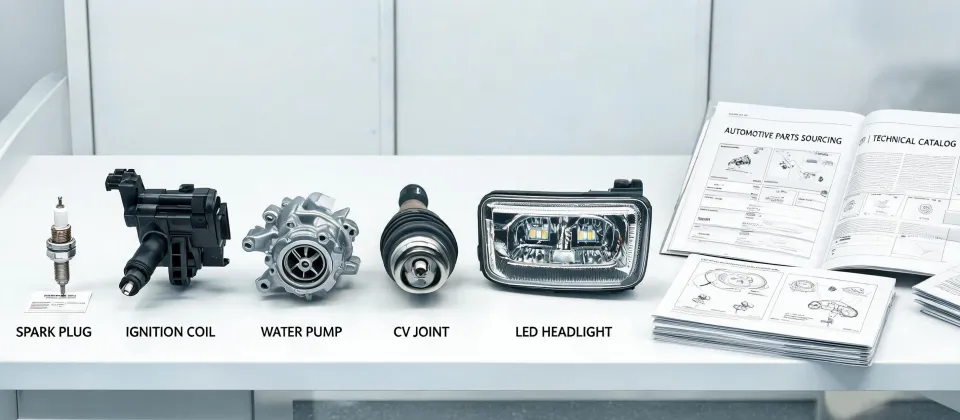
A coil-on-plug (COP) ignition system eliminates the traditional spark plug wires. Each spark plug gets its own ignition coil mounted directly on top. The benefits: no high-voltage cables to degrade, more accurate timing, and fewer moving parts to fail.
The failure mode you'll see most often is heat-related. A COP sits right on the engine, exposed to vibration and elevated temperatures. The primary winding insulation breaks down over time. You might notice a misfire at idle, a check engine light with a P0300-series code, or reduced fuel economy.
Now here's the question I get from buyers: do we need to buy the exact OEM ignition coil, or can we use an aftermarket unit?
My answer depends on the application. For a passenger car under warranty, OEM is safer — I've seen too many aftermarket COPs with inconsistent internal resistance that triggered misfire codes even when they were "new." For a fleet vehicle past warranty, a reputable aftermarket brand can be acceptable if it meets the original specifications.
But "meets the original specifications" is doing a lot of work in that sentence. I've reviewed over 200 ignition coil samples across different suppliers. The ones that failed my inspection almost always had one thing in common: the supplier didn't actually measure the secondary resistance, they just copied the label from the original part.
What should you check? The DC resistance of the primary and secondary windings, the connector pinout, and the mounting dimensions. If a supplier can't provide those in writing, that's a red flag.
(A note on terminology: Valeo makes ignition coils for certain applications. If you're specifying them for an OEM program, the quality agreement should reference the OEM part number, not the aftermarket brand's catalog number, because catalog supersessions can hide spec changes.)
How Does a Brake Caliper Work?
It's a hydraulic clamp. That's the simplest way to put it.
When you press the brake pedal, brake fluid is pushed from the master cylinder through the brake lines to the caliper. The caliper has one or more pistons that extend outward and press the brake pads against the rotor. The friction between the pads and the rotor slows the wheel.
The caliper body has to manage several functions simultaneously:
- Holding the pads in the correct position relative to the rotor
- Converting hydraulic pressure into mechanical clamping force
- Retracting the pistons when you release the pedal, so the pads don't drag on the rotor
The most common failure isn't a cracked caliper housing. It's corrosion and wear in the piston seal and sliding pins. When those fail, the caliper seizes or the pads wear unevenly. In severe cases, one side of the vehicle can pull when you brake.
If you're a fleet maintenance manager reading this: the takeaway is that caliper quality isn't just about the metal body. The seal compound, the piston coating, and the boot quality all matter. I once specified "OE-equivalent" calipers for a 120-vehicle delivery fleet and got parts with unbranded seals. They worked fine for 9 months, then the seals started leaking in 4 of the first 20 installations. The cost of replacement exceeded the savings from buying non-branded calipers.
What Does Underfloor Heating Have to Do With Any of This?
Honestly, not much in terms of vehicle systems. But it's a reminder that Valeo is more than just alternators and wipers.
If you're an HVAC installer sourcing a Valeo underfloor heating thermostat, you'd be dealing with a product that's designed to regulate the temperature of a hydronic heating system. The key specs are different from automotive: supply voltage, sensor type (NTC thermistor typically), switching capacity, and the protocol for the actuator that opens or closes the zone valve.
Here's the thing I tell our quality trainees: when you're working with any valve or thermostat product, start by examining the actuator's stroke or the relay contact rating. Getting those wrong is the most common specification error—I made that mistake in my first year, assuming "standard" meant the same thing to every vendor. Cost me a $600 redo. The specification said "24V" and I didn't specify AC or DC. The vendor interpreted it as AC, the system design required DC, and nothing worked.
For a Valeo contact request about this product type, the same rule applies: be specific about your voltage, mounting dimensions, and control logic. Don't expect the support team to guess which product line you're asking about just because the brand is the same.
Is Valeo Alternator Quality Actually Good?
Yes, generally. Valeo ranks among the major OEM alternator suppliers globally, along with Denso, Bosch, and Mitsubishi Electric. I've inspected original Valeo units that measured consistently within their rated output specs. That's not an accident—their manufacturing process is mature, and their validation testing for thermal condition is more thorough than what I've seen from some budget brands.
But "generally good" isn't the same as "always good for your specific application." The alternator for a police pursuit vehicle is not the same as the one for an economy sedan. Different output curves, different pulley ratios, different cooling requirements. If you're working with a distributor who can't tell you the output at idle and at cruise for the exact unit you're considering, find a different distributor.
I was called to look at a bid where my client was offered a "Valeo-type" alternator at 30% lower than the OEM cost. On paper, the alternator looked compatible. But when we examined the mounting ears, the bolt holes were 1.5 mm off. The vendor had a manufacturing tolerance of ±0.8mm—they were within their spec, but the alternator didn't fit the engine bracket. Neither the salesperson nor the manufacturer's drawing caught it, because the drawing was for a different day of the production run. That's why we always request a physical sample. Not a drawing. Not a data sheet. A sample.
I want to say the industry is getting better about this, but don't quote me on that—I reviewed a counterfeit alternator in 2024 that had "Valeo" cast into the housing but was visibly missing the Denso-designed internal regulator chip that the original uses. If you don't cut a unit open, you can't tell.
The Bottom Line
If you're looking for Valeo alternatives in the US, call an authorized distributor, ask for the specific part number, and request photos of the actual housing and connector. If you're looking for an ignition coil, test or inspect for winding resistance. If you're looking for a caliper, don't compromise on seals and boots. And if you're looking for a thermostat, check the voltage spec before you power it.
I should add that my experience is based on reviewing roughly 200+ parts annually for OEM and fleet programs. If you're working with a single vehicle or low-volume restoration, your risk tolerance might be different.